
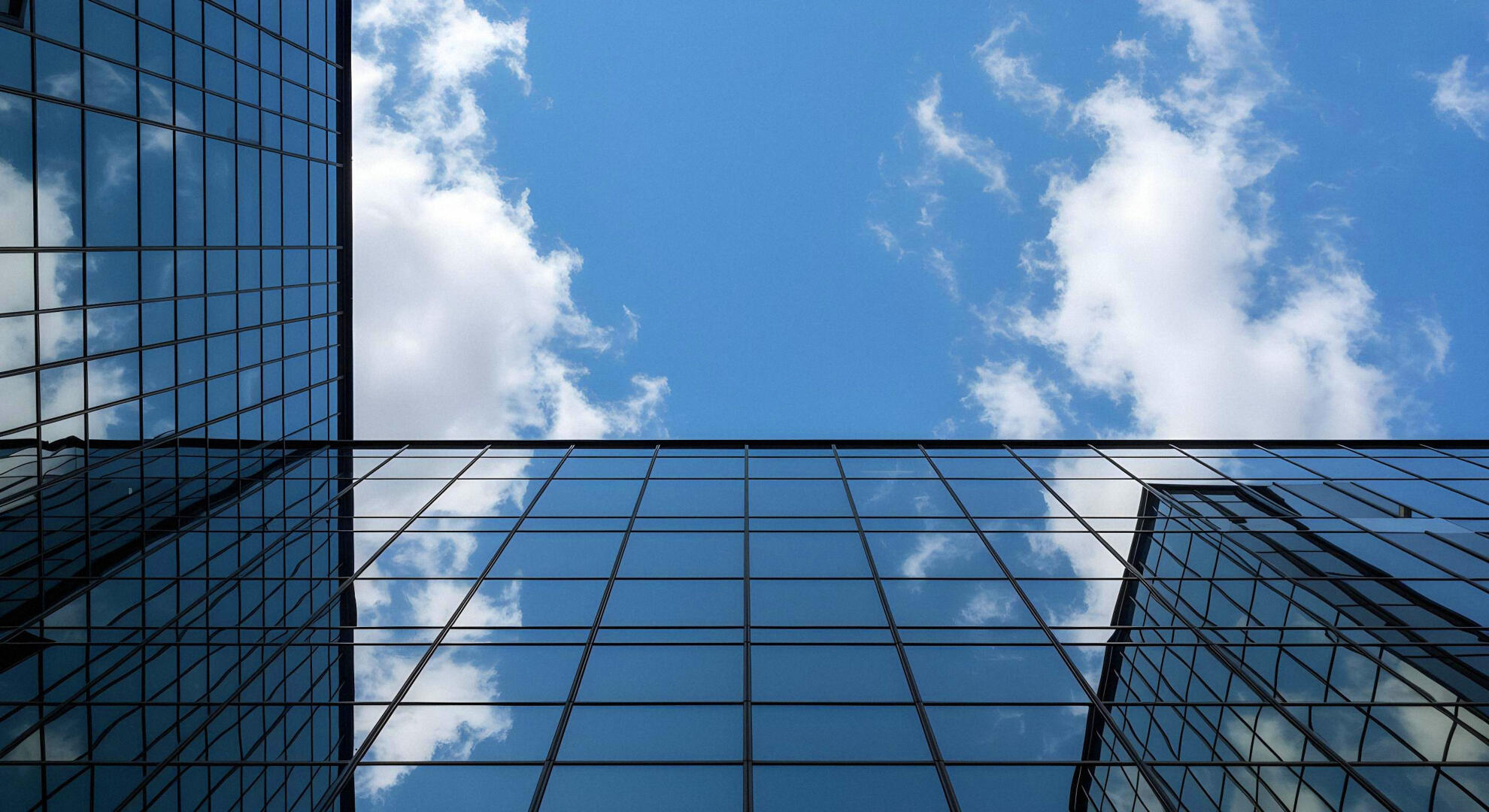
Insulating glazing for curtain walls is a composite insulating glass system made by assembling two or three sheets of glass, separated by specialized spacers and sealed to create a unit with superior performance in terms of thermal, acoustic and security insulation. This type of glazing is integrated into facade structures with visible metal profiles (usually aluminum), ensuring both functionality and architectural aesthetics.
Insulating glazing for curtain walls is ideal for the facades of modern office or residential buildings, where the aim is to maximize the intake of natural light without compromising the energy performance of the building envelope.
It is also recommended in shopping centers, hotels, hospitals and other spaces with intense traffic, where the criteria of durability, impact safety and low maintenance become critical factors in operation.
In addition, high-performance glazing solutions are effectively applied in public institutions, airports or buildings with special security and thermal control requirements, offering both physical protection and climatic stability in environments with complex functional regime.
Types of glass used and their applicability
The curtain walls allow the maximization of the glazed surface, offering abundant natural lighting, and the types of glass (clear float glass, colored, reflective glass, with solar control or low-E layer) allow the customization of the solution according to the specific requirements of the project, including from the perspective of local climatic factors and energy standards.
A thermal insulating glazing for curtain walls can be made using:
1. Float glass
It is a flat, transparent glass without special treatments, frequently used as an inner layer in glazed packages to ensure maximum visibility and transmission of natural light. Due to its neutral character, float glass is the basis for numerous insulating glazing combinations. However, it does not offer specific thermal or solar protection, which is why it is recommended to use it in combination with other types of treated glass, depending on the project's requirements.
2. Low-E glass
This glass features low emissivity magnetron deposition layers that limit heat loss through thermal radiation. It is recommended for improving the thermal insulation performance of glazing, especially in regions with temperate or cold climates, where it contributes to the reduction of heating costs. By lowering the thermal transfer coefficient (Ug), it keeps the heat inside during the cold season, without significantly compromising the light transparency.
3. Glass with Solar Control
This type of glass is treated with special layers that reflect or absorb a significant part of the solar radiation, thus reducing the internal thermal load of the space. It is ideal for use in areas with a warm climate or for facades facing south and west, where the aim is to minimize the greenhouse effect and overheating. Through these properties, solar control glass contributes significantly to reducing the cooling requirement and increasing the overall energy efficiency of the building.
4. Laminated Glass
It consists of two or more sheets of glass, joined together by an intermediate layer of PVB (polyvinyl butyral) or other elastic plastic materials. This structure confers increased impact resistance, confers safety and protection against unauthorized entry, being suitable for buildings where security or mechanical resistance is a priority. In the event of breakage, the fragments remain adherent to the intermediate film, thus preventing injuries and break-in.
5. Secure Glass
This glass undergoes a special heat treatment that gives it a mechanical resistance up to 4-5 times higher than untreated glass. On impact, it shatters into small, rounded, harmless granules, making it ideal for crash-risk applications such as facades, railings or doors. Through these features, the safety glass significantly increases the level of safety for users, while ensuring the durability of the glazed components. At the same time, the safety glass eliminates the risk of thermal shock in glass with high energy absorption.
6. Self-Cleaning Glass
It is a glass treated on the surface with a special photocatalytic and hydrophobic layer, which allows the decomposition of organic dirt and its removal by the action of rain. It is especially recommended for hard-to-reach facades or for projects where low maintenance is an important criterion. Thanks to this treatment, the glass maintains its transparency and aesthetic appearance in the long term, helping to reduce maintenance costs.
7. Colored Glass in Table
Mass-tinted glass is obtained by adding metal oxides directly into the glass mass during the manufacturing process, resulting in glass with a uniform tint throughout the thickness. The most common colors are grey, bronze, green and blue. This type of glass provides a certain reduction of solar radiation and has an important aesthetic role in facade projects, giving the building a contemporary and visually controlled appearance. It also reduces glare and direct light penetration, contributing to increased visual comfort in interior spaces. It is frequently used as an outer layer in insulating glazing or in combination with low-E glass to achieve increased solar control performance and energy efficiency.
8. Reflective Glass
Reflective glass is a float glass on which a metal or metal-oxide layer has been applied through pyrolytic or magnetronic processes, giving it the ability to reflect a significant part of solar radiation. This treatment causes a partial mirroring effect on the outside and provides effective visual protection for the interior spaces. It is mainly used for office facades, commercial buildings and projects where solar control is essential. In combination with low-E and/or laminated glass, reflective glass contributes significantly to lowering the thermal load and improving energy efficiency. It should be noted that the degree of reflectivity must be chosen carefully to avoid optical discomfort in the urban environment or excessive "mirror" effect in certain contexts.
Technical benefits of insulating glazing for curtain walls
Insulating glazing ensures a superior thermal performance, thanks to its composite structure that contributes to the reduction of the heat transfer coefficient (U-value). Thus, heat losses are limited in the cold season and the risk of overheating in warm periods is reduced, essential aspects for achieving a high level of energy efficiency in the building as a whole.
Through the appropriate selection of glass thickness and type, insulating glass provides effective sound insulation, significantly reducing ambient noise. This feature becomes essential in dense urban projects or in buildings located in areas exposed to heavy traffic or sources of industrial noise.
The available solutions in terms of profiles, treatments and finishes allow high architectural versatility, making it possible to integrate glazing into varied architectural concepts, be it minimalist facades, complex geometries or continuous glazed surfaces that support transparency and natural light.
From a structural point of view, the use of safety and laminated glass gives the glazing a high mechanical strength, ensuring protection against accidental impacts, vandalism or burglary attempts. This extra safety is essential in public buildings, shopping centers or high traffic areas.
Last but not least, insulating glazing with solar control treatments contributes to reducing the internal thermal load by reflecting or absorbing a significant part of the solar radiation. This property allows maintaining a comfortable and efficient indoor microclimate, reducing the need for artificial air conditioning and implicitly the related energy consumption.
Insulating glazing components
- Glass sheets: thicknesses between 4 and 10 mm, used either in monolithic glass or in laminated versions to increase safety and mechanical properties.
- Spacer rod: made of aluminum or composite materials with low thermal conductivity, which ensures precise spacing and tightness between glass sheets.
- Inert gas (argon): introduced between sheets to improve thermal insulation performance, reducing heat transfer by convection.
- Double sealing system: made by applying a primary butyl and a secondary layer of polyurethane or structural silicone, which guarantees constructive stability and prevents the loss of inert gas.
- Desiccant (molecular sieve): placed inside the spacer to absorb residual moisture, preventing condensation and long-term deterioration of glazing quality.
The advantages of Valras solutions in architectural projects
With over 30 years of experience and advanced manufacturing facilities, Valras offers high-performance insulating glazing, configurable for complex requirements:
- Large dimensions (up to 5,000 x 2,800 mm), allowing to reduce the number of elements and optimize the appearance of the facade.
- Wide range of glass with special features: self-cleaning glass, low-E, solar control, colored or reflective glass, acoustics
- Technical consultancy and support in choosing the optimal solutions for each project, taking into account architectural, climatic aspects and the regulations in force.
The implementation of high-quality insulating glazing in curtain walls is an essential component for contemporary high-performance architecture. This ensures not only an outstanding design, but also compliance with current energy standards, occupant comfort and investment sustainability.
For demanding projects, Valras offers customized solutions and dedicated technical support, transforming the architectural vision into reality through high quality products and certified technical performance.